Understanding California Law: What Is an Unmarked Crosswalk?
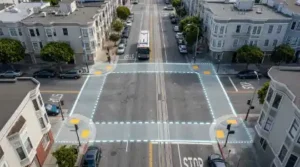 A common misconception among drivers—and even some law enforcement officers—is that a crosswalk only exists where white or yellow lines are painted on the pavement. Under California law, this is fundamentally untrue.
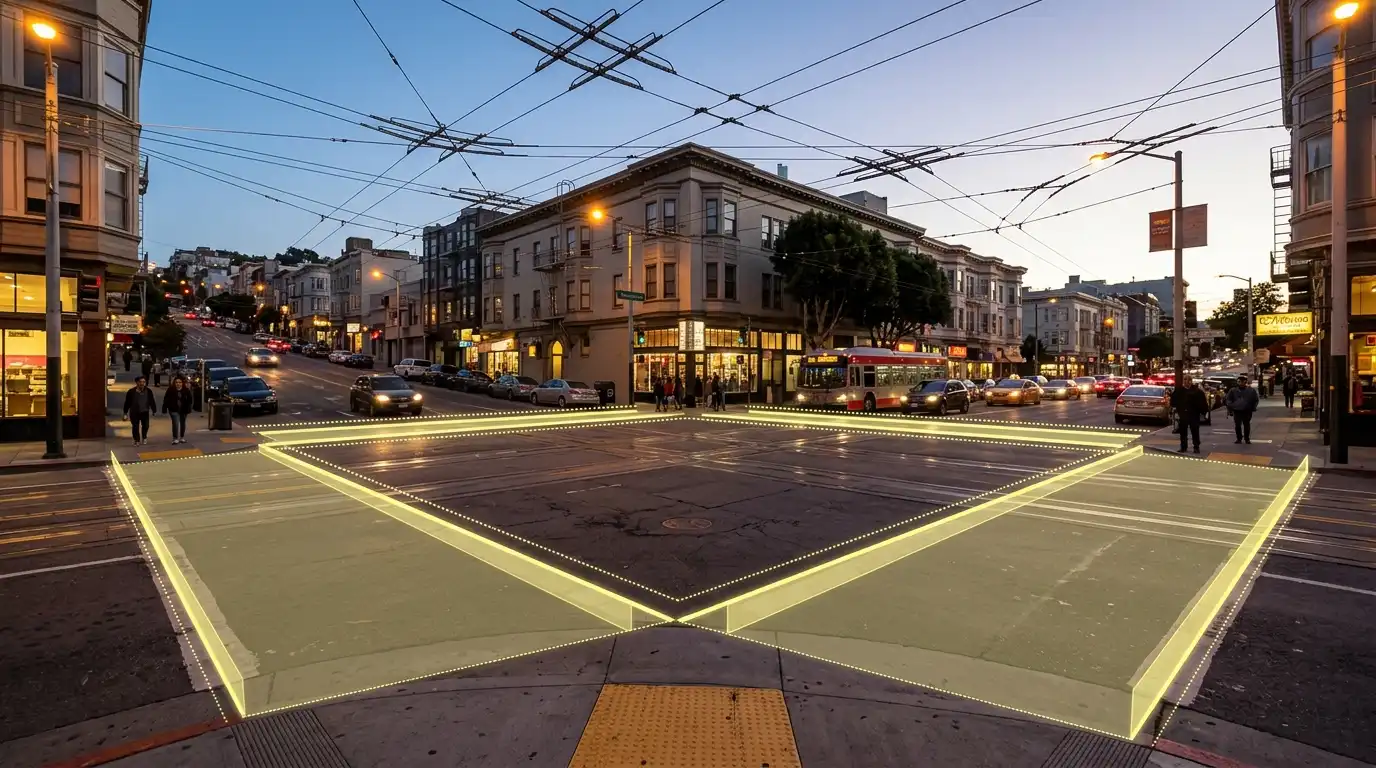
According to California Vehicle Code Section 275, a crosswalk exists at any intersection where sidewalks meet the street at approximately right angles. Unless explicitly marked with signs prohibiting pedestrian crossing, the legal crosswalk extends across the roadway following the boundary lines of the sidewalk corners.
This means that almost every street corner in San Francisco forms a legal crosswalk, regardless of whether any white paint appears on the asphalt. Drivers are legally required to recognize these invisible boundaries and yield to pedestrians crossing within them.
Driver Duty of Care and Pedestrian Right-of-Way
California law establishes clear duties of care for motorists approaching intersections. Under California Vehicle Code Section 21950, drivers must yield the right-of-way to a pedestrian crossing the roadway within any marked or unmarked crosswalk.
Key legal responsibilities for drivers include:
- Reducing Speed: Drivers must slow down or stop as necessary to safeguard pedestrians.
- Exercising Due Care: Drivers must operate their vehicles with heightened awareness near street corners, bus stops, and high-foot-traffic areas.
- No Overtaking Stopped Vehicles: If a vehicle stops at an unmarked crosswalk to let a pedestrian cross, vehicles approaching from behind are legally forbidden from passing the stopped car.
While pedestrians also have a duty to avoid stepping into oncoming traffic suddenly when a vehicle is too close to stop safely, the burden of exercising reasonable care rests heavily on drivers controlling heavy motor vehicles.
How the “Freedom to Walk Act” Changed California Crossing Laws
Pedestrian rights in California were further clarified with the passage of the Freedom to Walk Act (Assembly Bill 2147). This legislation prevents law enforcement from ticketing pedestrians for jaywalking unless an immediate danger of a collision exists.
For injured pedestrians, this law reinforces that crossing a street outside a painted crosswalk or mid-block does not automatically make the pedestrian negligent. In personal injury claims, insurance adjusters can no longer simply point to the absence of painted lines to absolve their insured driver of liability.
Insurance Tactics in Unmarked Crosswalk Claims
Insurance companies routinely exploit public misunderstanding regarding unmarked crosswalks. After a collision, adjusters often attempt to minimize settlements using specific strategies:
- Blaming the Pedestrian for “Jaywalking”: Adjusters deliberately conflate unmarked crosswalks with illegal crossing, attempting to claim the pedestrian caused the crash.
- Misapplying Comparative Fault: California uses a pure comparative negligence model. Insurers try to assign high percentages of partial fault (e.g., claiming the pedestrian was distracted or wore dark clothing) to reduce the total payout amount.
- Quick Lowball Settlement Offers: Contacting injured victims early before the full extent of medical care, rehabilitation, or lost wages is calculated.
By establishing that the collision occurred inside a legally recognized unmarked crosswalk, your attorney can dismantle these insurance defense arguments and hold the driver fully accountable.
Crucial Evidence to Protect Your Claim
Because unmarked crosswalk collisions often involve conflicting stories between the driver and pedestrian, gathering objective evidence immediately after the incident is essential:
- SFMTA and Muni Footage: San Francisco Municipal Transportation Agency (SFMTA) buses and commercial vehicles frequently carry dashcams that capture intersection events.
- Nearby Surveillance Cameras: Businesses, residential doorbells, and traffic management cameras near the intersection often record street movement and signal conditions.
- Traffic Signal and Infrastructure Data: Documenting corner sightlines, street lighting conditions, missing signage, and parked vehicle obstructions that may have impacted driver visibility.
- Eyewitness Statements: Contact details and recorded statements from neutral bystanders, commuters, or nearby business employees who witnessed the vehicle approaching the corner.
Legal Options After an Unmarked Crosswalk Collision
If you were struck by a vehicle while crossing at an unmarked intersection in San Francisco, you have the legal right to seek compensation for all economic and non-economic losses caused by the collision. Recoverable damages typically include:
- Emergency and Medical Costs: Ambulance transport, hospital stays, surgeries, physical therapy, and ongoing future medical treatments.
- Lost Earnings and Reduced Capacity: Reimbursement for missed work hours and compensation for long-term impacts on your career earnings.
- Pain and Suffering: Compensation for physical pain, emotional trauma, anxiety, and diminished quality of life resulting from catastrophic injuries.
- Property Damage: Replacement costs for personal items damaged during the impact, such as phones, clothing, or personal equipment.
Protect Your Rights with Skilled Legal Counsel
Unmarked crosswalk cases require a detailed understanding of California traffic statutes, San Francisco urban road design, and insurance negotiation strategies. Do not let an insurance adjuster convince you that you were at fault simply because the intersection lacked painted white lines.
If you or a loved one were injured while crossing a street in San Francisco, contact our experienced personal injury team today for a free case evaluation to protect your legal options and pursue full compensation.