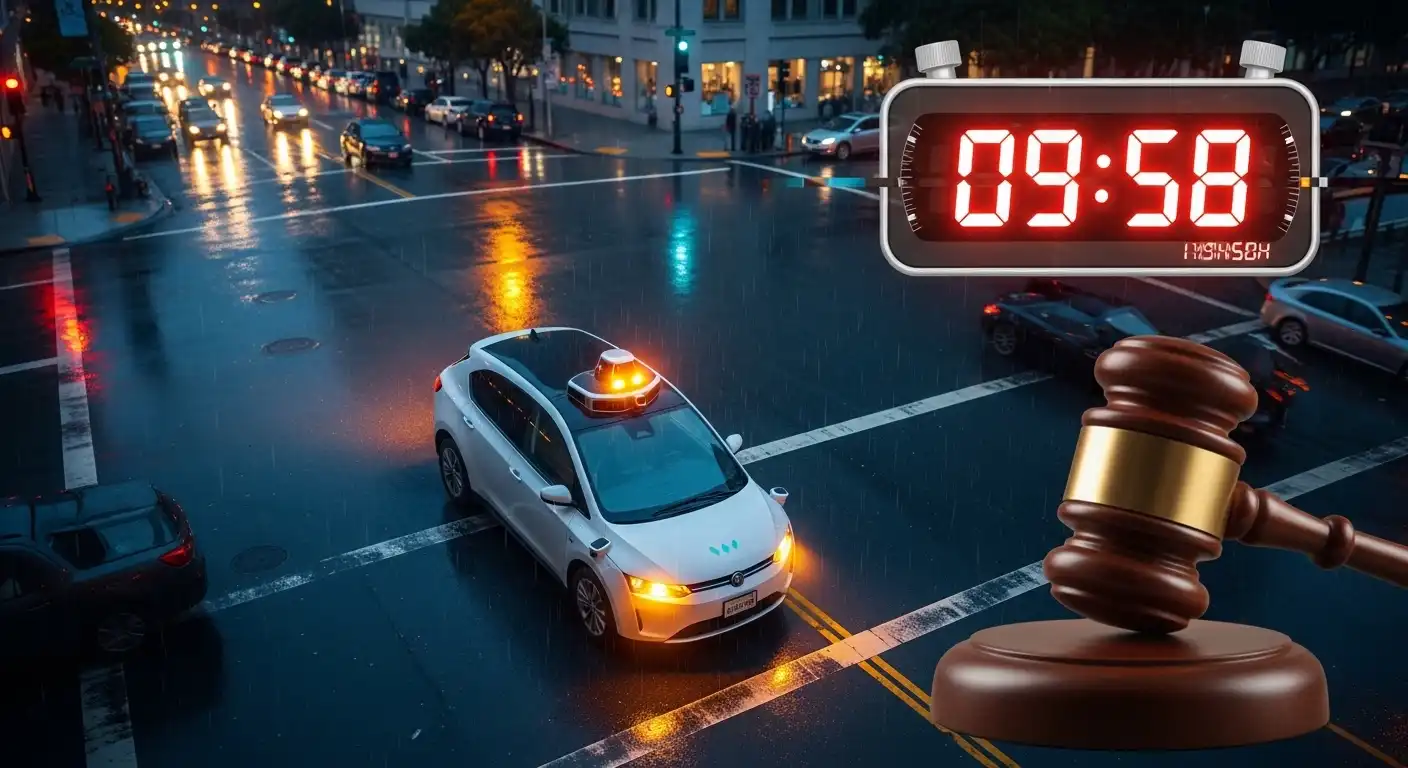
San Francisco has long been the global testing ground for driverless technology, but 2026 marks a major shift in how these companies are held accountable after a crash. With the full implementation of Senate Bill 1246 (SB 1246), California has moved beyond simply allowing autonomous vehicles (AVs) on our streets—it is now demanding immediate, human accountability when things go wrong.
For years, when a “ghost car” stalled or collided with a human driver, the response from tech giants was often a remote software reset or a long wait for a technician coming from across the Bay. In 2026, those days are over. If you have been involved in a collision with a driverless car in San Francisco, the “10-Minute Rule” is now a cornerstone of your legal recovery. At sanfranciscoaccidentlawyer.net, we are leveraging these new response mandates to ensure AV manufacturers can no longer hide behind remote data logs.
What is the SB 1246 “10-Minute Response” Mandate?
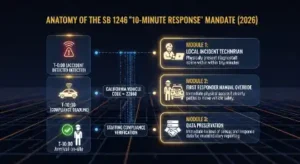
Under SB 1246, which took full effect in early 2026, any manufacturer operating Level 4 or Level 5 autonomous vehicles (vehicles without a human safety driver) on public roads must maintain a robust emergency response infrastructure within the jurisdiction they operate. Specifically, the law requires:
- Local Incident Technicians: AV companies must station trained “Quick-Response” personnel within San Francisco city limits to ensure rapid physical access to the fleet.
- The 10-Minute Clock: In the event of an accident, a hardware failure, or a vehicle “immobilization” that obstructs traffic, a company technician must be physically present on the scene within 10 minutes of the incident.
- First Responder Manual Overrides: Every vehicle must be equipped with physical, external manual override controls that SFPD and SFFD can access immediately to move the vehicle safely without waiting for a company representative.
How the 10-Minute Rule Proves Corporate Negligence
In a standard San Francisco car accident, proving negligence involves looking at human behavior—did the driver speed? Did they run a red light? In an AV crash, we look at Corporate Compliance. If a robotaxi hits you and the company fails to have a technician on-site within the 10-minute window, they may be in violation of state safety statutes.
This delay is more than a logistical annoyance; it is a safety hazard. A stalled or crashed AV that sits for 30 minutes blocks emergency vehicles and creates “secondary accidents” as other drivers swerve to avoid the unmoving obstacle. Under 2026 legal standards, failing to meet the SB 1246 timeline can be used as evidence of negligence per se. This means the company is presumed negligent because they violated a law designed to protect public safety.
Preserving Digital Evidence: The New Battlefield
Unlike traditional accidents, AV crashes are solved through high-frequency sensor data. SB 1246 requires AV operators to maintain specified data regarding response times and “remote assistant” staffing levels. This is a goldmine for your personal injury claim. In 2026, we subpoena three specific data sets:
- Staffing & Deployment Logs: To determine if the company was “under-staffed” on technicians, making it impossible to meet the 10-minute rule during peak SF traffic.
- Remote Intervention Hand-offs: To see if a human “Remote Assistant” tried to take control of the car seconds before the impact and whether that intervention actually caused the crash.
- Sensor Fusion Playbacks: Much like the forensic audits used in e-bike battery fires or e-moto accidents, this data shows exactly what the car’s LIDAR and Radar perceived before the collision.
Expert Tip: If you are hit by a driverless car, do not just wait for the police. Use your smartphone to record the exact time of the impact and the exact time the “Incident Technician” arrives in their company-marked vehicle. This timestamp is the most valuable piece of evidence you can provide your attorney.
Product Liability vs. Response Liability
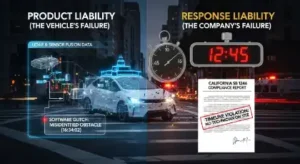 The 2026 legal landscape splits AV claims into two categories. First is Product Liability: did the software or hardware fail? This is similar to how we track technical failures in environmental monitoring systems. The second is Response Liability: did the company fail its statutory duty to manage the aftermath?
In San Francisco, we are seeing cases where the crash itself was minor, but the company’s failure to respond within 10 minutes caused a massive traffic pile-up or delayed an ambulance. In these scenarios, the AV manufacturer can be held liable for the entire chain of damages caused by their lack of local infrastructure.
Accountability Across the Niche Network
This push for accountability is a statewide trend for 2026. Just as general contractors are held to joint liability for their site’s safety, and rideshare platforms are being linked to their drivers, AV companies can no longer distance themselves from the physical reality of their fleet. If their “robot” is on our streets, their humans must be ready to respond.
At sanfranciscoaccidentlawyer.net, we don’t just negotiate with insurance adjusters; we litigate against multi-billion dollar tech giants. We understand the technical nuances of SB 1246 and how to use the 10-minute rule to maximize your settlement and ensure your medical bills are covered.