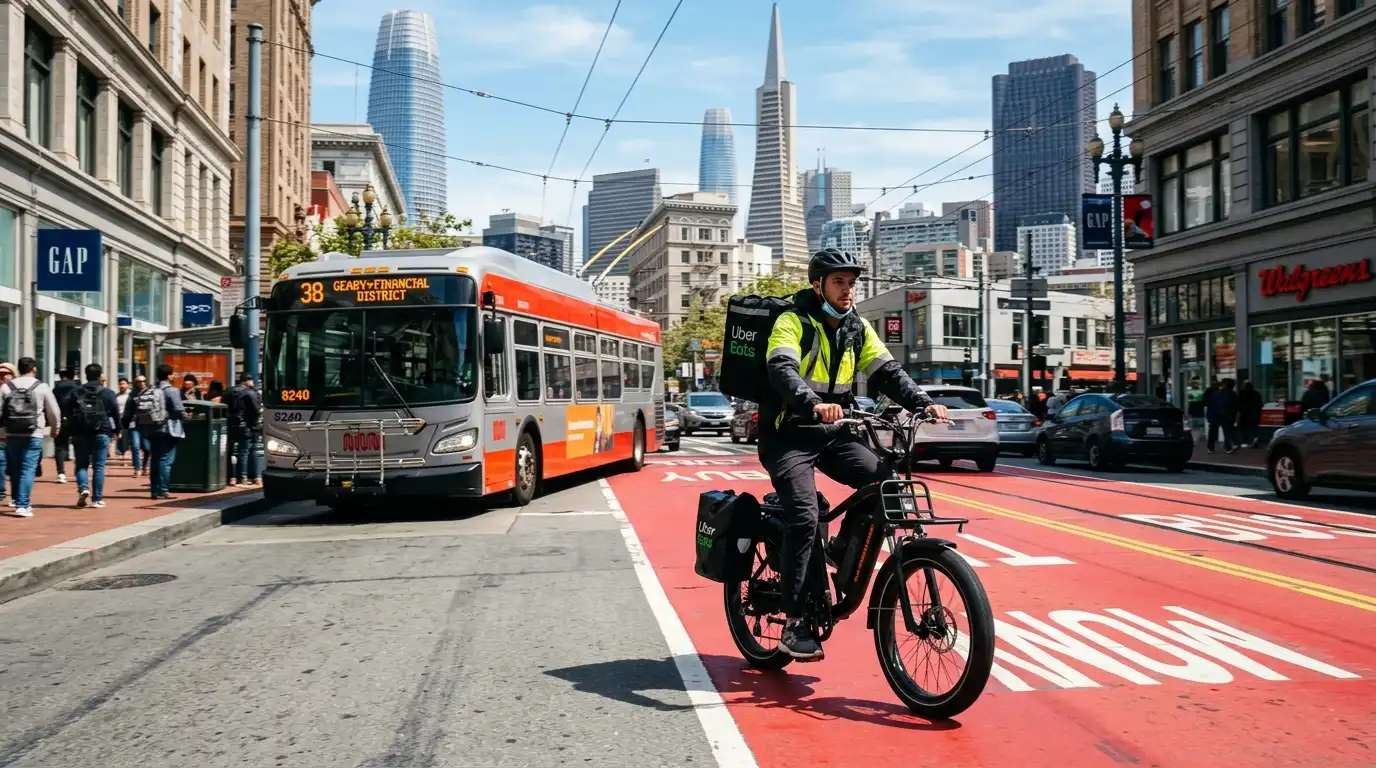
San Francisco’s dense urban layout and steep inclines have fueled a massive rise in micro-mobility options. From gig-economy delivery couriers racing on electric bikes across the Financial District to commuters maneuvering motorized scooters through SoMa, e-bikes and delivery scooters have transformed how goods and people move throughout the city. However, this surge in speed and volume has also led to a dramatic spike in traffic incidents, creating complex legal questions around E-Bike and Delivery Scooter Accidents in San Francisco.
When an electric bicycle or delivery scooter collides with a pedestrian, a passenger vehicle, or a Muni bus, determining liability requires navigating a web of California state vehicle codes, local San Francisco Municipal Transportation Agency (SFMTA) regulations, and commercial corporate liability. Understanding your rights and the rules of the road is critical to securing compensation after an injury.
Understanding San Francisco’s Micro-Mobility Regulations
 Under California law and local ordinances, electric bicycles (Class 1, 2, and 3) generally share the same rights and responsibilities as traditional bicycles. However, the addition of electric motors—capable of propelling riders at speeds from 20 mph up to 28 mph—significantly increases the impact force in a crash.
San Francisco enforces strict traffic laws regarding where these devices can legally operate. The two most common locations for micro-mobility collisions—and complex liability disputes—are Muni transit lanes and city sidewalks.
Navigating Muni Transit Lanes: Who Has the Right of Way?
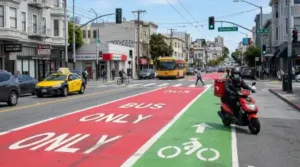
San Francisco features over 43 miles of dedicated red-painted transit lanes designed to keep Muni buses, light rail, and emergency vehicles moving efficiently. A frequent point of confusion for delivery couriers and e-bike riders is whether they are permitted to travel inside these dedicated transit corridors.
The Rules for E-Bikes and Scooters in Red Lanes
- General Prohibition: Under SFMTA transit lane rules, bicycles and electric personal mobility devices are strictly prohibited from traveling along red transit lanes. These lanes are reserved exclusively for Muni vehicles, taxis, and emergency response units.
- Limited Exceptions: Cyclists and e-bike operators may only enter a red transit lane briefly when preparing to execute a turn at an intersection or driveway, or when making immediate curbside contact.
When a delivery rider illegally travels down a Market Street or Mission Street transit lane to bypass auto traffic and collides with a turning passenger car or a pedestrian crossing at an intersection, the e-bike operator’s violation of municipal transit rules can serve as strong evidence of negligence under California’s negligence per se doctrine.
Sidewalk Collisions: Pedestrian Right of Way and Local Bans
Perhaps the most hazardous scenario for San Francisco pedestrians involves motorized delivery scooters or fast-moving e-bikes traveling on sidewalks.
State and Local Sidewalk Prohibitions
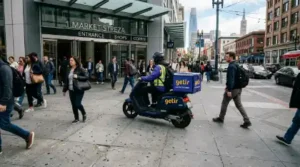
California Vehicle Code (CVC § 21230) strictly forbids riding motorized scooters on public sidewalks. Similarly, San Francisco Municipal Code prohibits riding electric bicycles on sidewalks within any business district or during night hours. Delivery couriers often use sidewalks to shortcut around gridlocked streets or quickly reach storefront doors, creating severe collision hazards for pedestrians exiting shops, stepping out of doorways, or navigating curb ramps.
When an e-bike or scooter hits a pedestrian on a sidewalk, the rider is almost always at fault. Pedestrians maintain the primary right of way on sidewalks. Victims struck by sidewalk riders often sustain serious injuries, including head trauma, broken bones, and soft tissue damage.
Unpacking Corporate and Third-Party Liability in Delivery Crashes
Establishing fault in a delivery scooter or e-bike crash involves more than identifying the individual rider. Many delivery couriers work as independent contractors for major app-based delivery companies like DoorDash, Uber Eats, Instacart, or Grubhub.
App Company Responsibility
Gig economy companies frequently argue that because couriers are independent contractors rather than direct employees, the corporation holds no liability for the rider’s traffic violations. However, an experienced personal injury attorney can investigate several potential avenues for third-party recovery:
- Third-Party Corporate Insurance Policies: Certain delivery platforms maintain third-party liability insurance coverage that activates while a courier is actively fulfilling an order.
- Commercial Auto and Bicycle Insurance: Individual riders who purchase specialized commercial riders or policy add-ons may carry coverage for accidents occurring during commercial delivery tasks.
- Negligent Hiring or Retention: If a delivery platform fails to verify basic safety qualifications or permits a courier with a history of reckless riding to continue taking orders, the platform itself may face direct liability claims.
Steps to Take After an E-Bike or Delivery Scooter Accident in San Francisco
If you are hit by a delivery scooter or injured in an e-bike collision in San Francisco, taking prompt action helps preserve vital evidence for your personal injury claim:
- Call 911 immediately: Request an officer from the San Francisco Police Department (SFPD) to create an official collision report detailing traffic violations such as illegal sidewalk or red lane usage.
- Identify the Delivery Company: Document whether the courier was carrying a branded delivery bag (e.g., Uber Eats, DoorDash) or actively using a navigation app on their smartphone.
- Gather Witness Information and Visual Evidence: Take clear photographs of the vehicle, device placement, intersection markings, red transit paint, and any visible bodily injuries. Obtain contact details from nearby witnesses or business owners with security cameras.
- Seek Immediate Medical Attention: Even if your injuries seem minor at first, latent conditions such as concussions or internal bruising require prompt diagnostic evaluation by a medical professional.
- Consult an Experienced San Francisco Personal Injury Lawyer: Navigating municipal traffic laws, multi-party insurance policies, and corporate liability defenses requires skilled legal representation.
Protect Your Rights with Skilled Legal Advice
San Francisco’s evolving traffic ecosystem demands an understanding of local transit infrastructure, California Vehicle Codes, and corporate insurance practices. Whether you were a pedestrian struck on a city sidewalk or a motorist involved in a collision with an e-bike operating illegally inside a Muni transit lane, you have the right to seek compensation for medical bills, lost wages, and pain and suffering.
Contact our dedicated legal team today to review your case, evaluate liability factors, and fight for the compensation you deserve.